
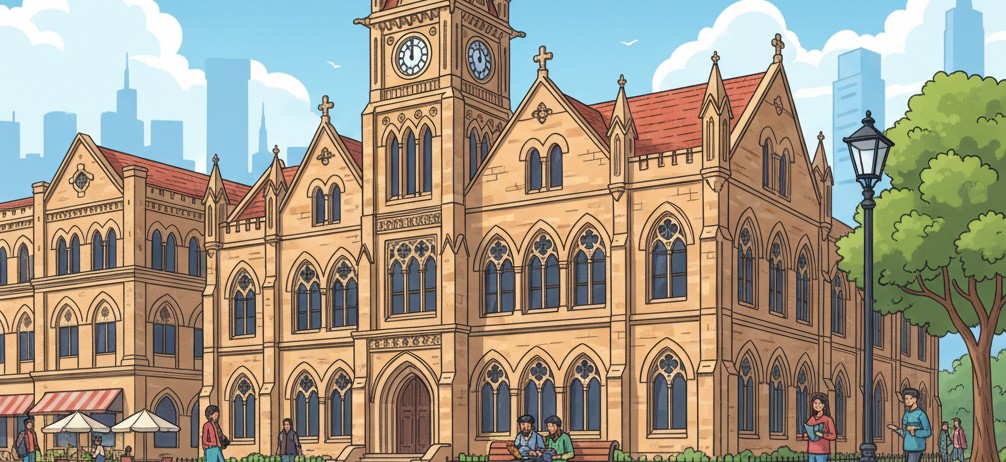
J. N. Petit Library & Reading Room in Mumbai is a serene, century-old heritage library founded through Parsi philanthropy to nurture learning and scholarship. Established in 1898, the library sits on D.N. Road within the historic Fort precinct and is admired for its Neo-Gothic façade, high ceilings, and wood-panelled interiors. The reading room retains a calm, contemplative atmosphere that attracts students, researchers, heritage enthusiasts and city walkers looking for a peaceful haven amid South Mumbai’s bustle. The library houses an expansive collection - including vintage volumes, periodicals and Parsi community literature - with over 150,000+ titles cited in heritage write-ups. Membership is affordable and membership fees support conservation and day-to-day running; staff are frequently praised in visitor reviews for being helpful and welcoming. The building’s architectural features include pointed arches, large arched windows that flood the halls with natural light, wooden galleries and classic colonial-era masonry that blends with neighbouring heritage landmarks such as Flora Fountain and David Sassoon Library. The Petit Library is often included in Kala Ghoda and Fort heritage walks and is valued as both a functioning reading space and a cultural landmark that preserves archival materials and the rhythms of traditional library life. Visitors are encouraged to respect library rules, keep noise to a minimum and inquire about membership or research access at the counter.
Quick Facts:
- Founded: 1898 - Parsi philanthropic origin.
- Location: D.N. Road, Fort, Mumbai - part of the Fort heritage precinct.
- Collection size: reported > 150,000+ books and periodicals.
- Architecture: Neo-Gothic style - pointed arches, wood panelling, tall windows.
- Atmosphere: Quiet reading room, popular with students and researchers.
- Membership: Subsidised rates - staff helpful (popular visitor comment).
- Nearby landmarks: Flora Fountain, David Sassoon Library, Kala Ghoda.
- Visitor tip: Photography may be restricted inside - always ask staff first.
The history of the J. N. Petit Library & Reading Room in Mumbai is deeply rooted in the philanthropic and educational legacy of the Parsi community. The institution was founded in 1898 under the guidance of the Petit family, one of Mumbai’s most notable industrial and charitable families. Originally established to support Parsi students with an affordable reading space and access to books, the library soon grew beyond its community origins and began welcoming members from all walks of life.
The early 20th century marked a period of rapid expansion for the library. Its collection widened significantly, including rare periodicals, English-language classics, scholarly works and books linked to colonial-era academia. Over the decades, the library evolved from a niche reading room into a respected cultural institution within the Fort precinct, surrounded by other iconic landmarks like Flora Fountain, Elphinstone College and David Sassoon Library.
Throughout its journey, the library has remained committed to preserving printed knowledge. Media reports and heritage articles highlight its role in safeguarding rare books, archival materials, and literature linked to the Parsi community’s intellectual history. Restoration initiatives have helped maintain the structural integrity of the building while respecting its original Neo-Gothic character.
Despite changing reading habits in the digital age, the library continues to retain loyal members and visitors who appreciate its quiet atmosphere, low membership cost and old-world charm. The J. N. Petit Library stands today as a testament to more than a century of learning, community service and heritage conservation in the heart of Mumbai.
Quick Facts:
- Established in 1898 through Parsi philanthropy.
- Initially meant for Parsi students, later opened to wider public.
- Expanded rapidly in early 20th century with a diverse book collection.
- Preserves rare books, periodicals and archival materials.
- Located in Fort precinct near major colonial-era landmarks.
- Remains active despite digital-era decline in reading-room memberships.